The Beginning – A Building That Ate Energy for Breakfast
The Qianhai Snow World in Shenzhen is the largest indoor snow park in the world. Its 35,000-square-meter curved roof, designed to resemble a blue whale breaching the ocean surface, is an architectural marvel.
But here's the problem: a building that size, maintaining sub-zero temperatures year-round in subtropical Shenzhen, is an energy monster.
"Operating a snow park of this scale without a sustainable energy solution is simply not viable over the long term," the project lead told us during our initial consultation. "We needed to turn this energy consumer into an energy producer – but we had constraints that made standard solar solutions impossible."
The Challenge – A Roof That Seemed Impossible for Solar
The project presented engineering challenges that had turned away multiple solar solution providers:
Challenge The Constraint
Weight Limit Roof load capacity: just 20kg per square meter – standard PV glass panels weigh 2-3x that
Wind Pressure Shenzhen typhoon zone – required 9.1 kPa wind resistance, equivalent to Category 17 typhoon protection
Aesthetics Curved architectural design – panels had to follow the "whale" contours without disrupting the visual effect
Curved Surface 35,000m² of irregular geometry – no standard solar mounting system could adapt
Integration PV had to be the building itself, not an add-on – BIPV (Building-Integrated Photovoltaics)
"We had multiple suppliers tell us 'it can't be done' or propose solutions that would have ruined the architectural design," the project director explained. "We needed someone who could engineer a framing system that worked with the building – not against it."
Our Solution – Aluminum Framing Engineered for BIPV Integration
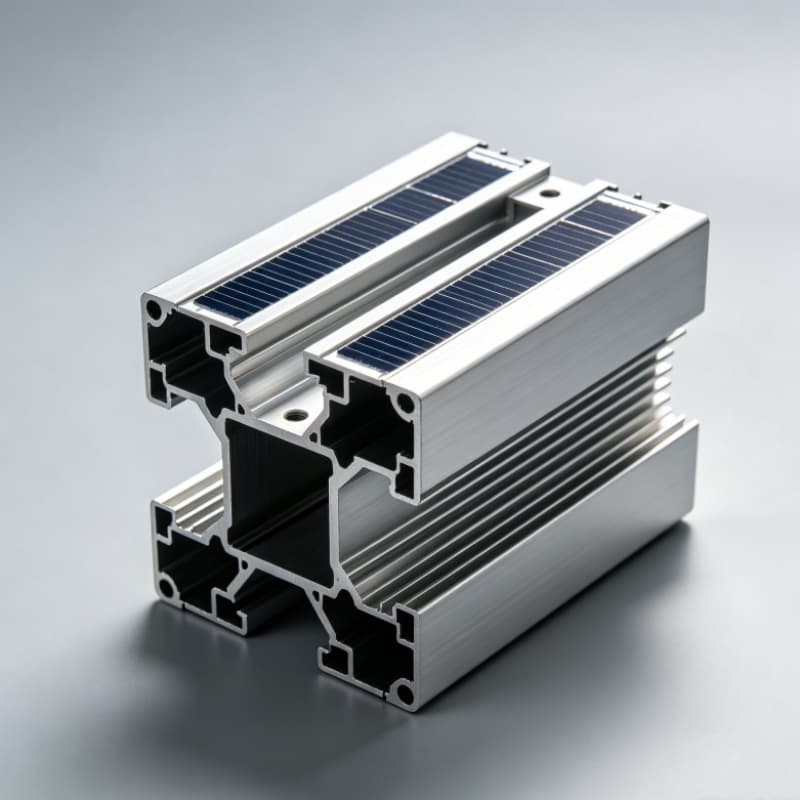
We were brought in as the aluminum framing partner for the BIPV curtain wall system. Our challenge: design and manufacture a lightweight, high-strength framing structure that could hold the photovoltaic glass panels while staying within the 20kg/m² weight limit and meeting 9.1kPa wind pressure requirements.
The Framework: Custom-Designed for the "Whale Roof"
Design Element Our Engineering Solution
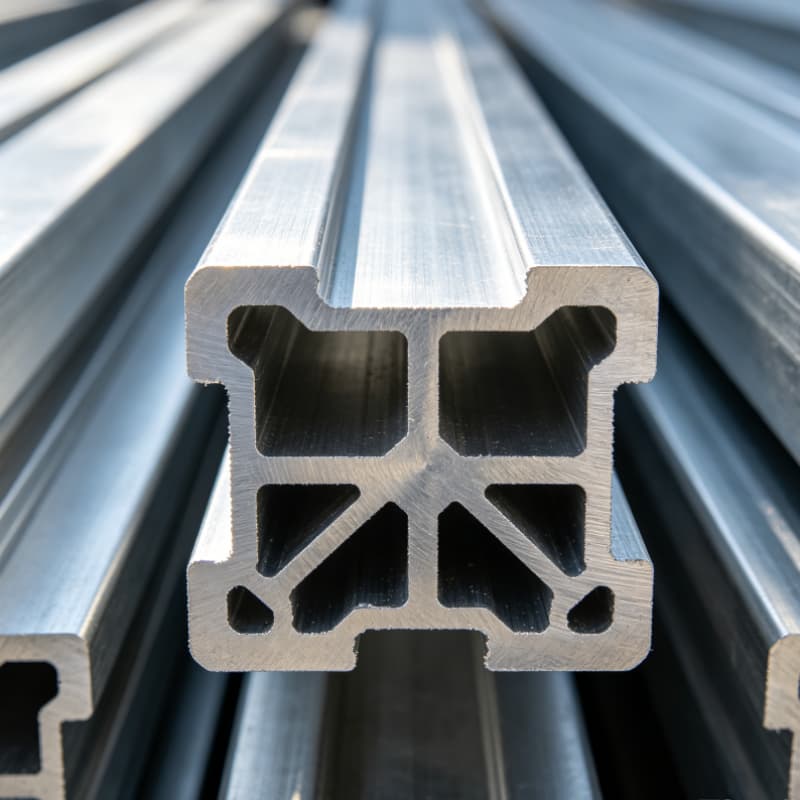
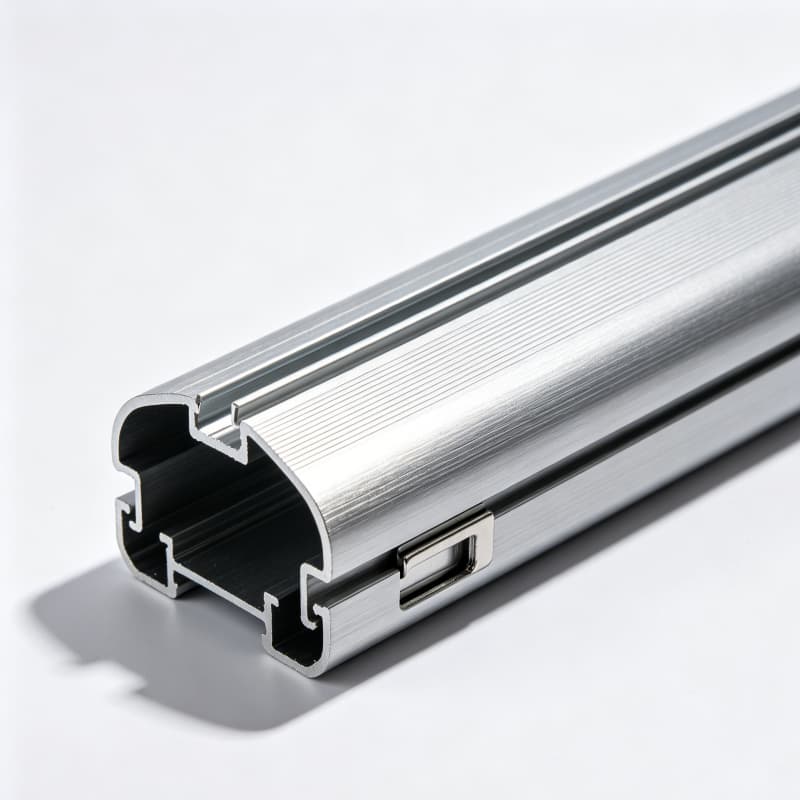
Profile Selection Custom 6005-T6 aluminum sections, lightweight yet high-strength, engineered for the curved geometry
Frame-to-Panel Integration Precision-machined support rails that "capture" PV glass panels without additional heavy substructures
Load Distribution Multi-point support system that distributes panel weight evenly across the structural grid
Wind Load Management Reinforced connection points at high-stress areas, meeting and exceeding 9.1kPa standard
Corrosion Protection Heavy-duty anodized finish for long-term outdoor exposure in coastal Shenzhen
The Innovation: A Revolutionary Mounting Approach
Working with the BIPV system integrator, we developed a modular aluminum support frame that:
Reduced dead load by 40% compared to conventional steel-rail solutions
Distributed wind loads through the structural grid rather than concentrating them on glass panels
Enabled 3-axis adjustability for aligning glass panels to the building's curvilinear geometry
Provided built-in drainage channels to prevent water pooling on the 35,000m² surface
Allowed for thermal expansion across a 120-meter building span
Our Thailand facility fabricated over 15,000 custom aluminum components, each tagged with QR codes linking to its precise location on the 35,000m² roof.
The Execution – Delivering at "Snow Park Speed"
Month 1-2: Engineering & Prototyping
Our engineers worked with the curtain wall team to refine the design. Four prototype iterations were tested for wind load and weight before final approval. "We failed three times before we got the wind-load solution right," one engineer recalled. "But the building needed a solution, not excuses."
Month 3-5: High-Speed Fabrication
With production running 24/7 at our Thailand facility, we completed all 15,000+ components within 12 weeks – each precision-cut, pre-drilled, and pre-assembly-tested.
Month 6-8: Installation
3,500 square meters of BIPV panels were installed per week. The aluminum framing system enabled assembly speeds that would have been impossible with steel: workers simply matched QR-coded components to installation drawings and clicked them into place.
The Results – A Building That Pays Its Own Energy Bill
Today, the Qianhai Snow World stands as one of China's largest BIPV installations:
Metric Achievement
Annual Power Generation 6.3 million kWh – enough to power the snow park's cooling systems
Carbon Reduction Over 5,000 tons CO₂ annually – equivalent to planting 270,000 trees in Shenzhen
Grid Offset Covers 20% of the facility's total energy consumption
Wind Resistance Certified at 9.1kPa – capable of withstanding Category 17 typhoons
Weight Achieved 19.8kg/m² – beating the 20kg/m² limit
The Customer's Words
"This was the most complex BIPV project in our portfolio. The aluminum framing system delivered by Jiangsu Dinghao was absolutely critical – it gave us the strength we needed with the weight we were allowed. The fact that this roof generates 6.3 million kWh per year while looking like a work of art is proof that when engineering and architecture work together, anything is possible."
— BIPV Project Director, Qianhai Snow World
Why This Case Matters for Your BIPV Project
Challenge Our Solution Outcome
Weight limitation (20kg/m²) Custom lightweight 6005-T6 profiles 40% lighter than steel alternatives
Typhoon wind loads (9.1kPa) Reinforced connection design, tested to exceed standard Certified Category 17 protection
Curvilinear building geometry 3-axis adjustable mounting system Perfect alignment with architectural curves
35,000m² scale QR-coded, pre-fabricated components 8-week installation, zero rework
Ready to Transform Your Building into a Power Plant?
BIPV represents the future of sustainable architecture. Whether you're designing a new building or retrofitting an existing one, our aluminum framing solutions make BIPV possible at any scale.
Contact us today to discuss your project.



Leave A Message
Scan to Wechat :


 Product categories